
The SoCal Homeowner’s Guide to S-Tile Roofs: What Your Inspector Looks For and Lifespan
Updated: 2 days ago
When you look at a classic Southern California home, it’s easy to be captivated by a beautiful, undulating S-tile roof. Whether made of timeless terracotta clay or modern rugged concrete, these tiles evoke a sense of permanent, structural luxury.
For a close look at a tile roof without walking on it, see our drone roof inspection services.
In fact, real estate listings frequently boast about "100-year clay tile roofs." But as an InterNACHI Certified Professional Home Inspector, I look past the surface cosmetic appeal. A roof is not just a collection of tiles thrown onto a house; it is an interdependent engineering system. While the tiles themselves can easily outlive the homeowner, the hidden, perishable components beneath them have a much shorter expiration date. When an S-tile roof fails, it is almost never the tile's fault; it is a failure of the system's weakest links.
If you own or are looking to buy a home in Southern California, here is what you need to understand about the anatomy of your roof, and why its components are in a constant race against time.

Download our inspection guide here!
Understanding the S-Tile Roofing System
To understand how water stays out of your home, you have to look at the roof as a three-part defensive shield. If any one of these layers is compromised, the entire system collapses.
Layer 1: S-Tiles
Function: Sheds 95% of water, blocks UV rays, resists fire.
Layer 2: Flashing
Function: Protects the joints, walls, penetrations, and intersections.
Layer 3: Underlayment
Function: The final waterproof barrier on the wood roof deck.
The tiles are the most visible and durable part of the system. Their primary job is to shed the vast majority of rainwater, block destructive UV rays, and provide unmatched Class A fire resistance against Southern California wildfires.

Clay S-Tiles can easily last 75 to 100+ years because their kiln-fired composition doesn't decay or fade.
Concrete S-Tiles are a tough, budget-friendly alternative with a physical lifespan of 40 to 70 years.
Flashing consists of metal channels installed anywhere the roof changes direction, breaks, or meets a vertical obstruction (such as chimneys, valleys, skylights, plumbing vents, and stucco walls). Because S-tiles are curved, standard flat flashing sheets cannot close the gaps.

Installers must use specialized profile flashings or malleable "dead-soft" metals that can be hand-hammered to mirror the wavy contours of the tiles. Flashing takes a massive beating from thermal expansion and contraction. Depending on the material used (galvanized steel vs. copper or lead) and exposure to coastal salt air, flashing often begins to fail, warp, or rust out within 15 to 25 years.

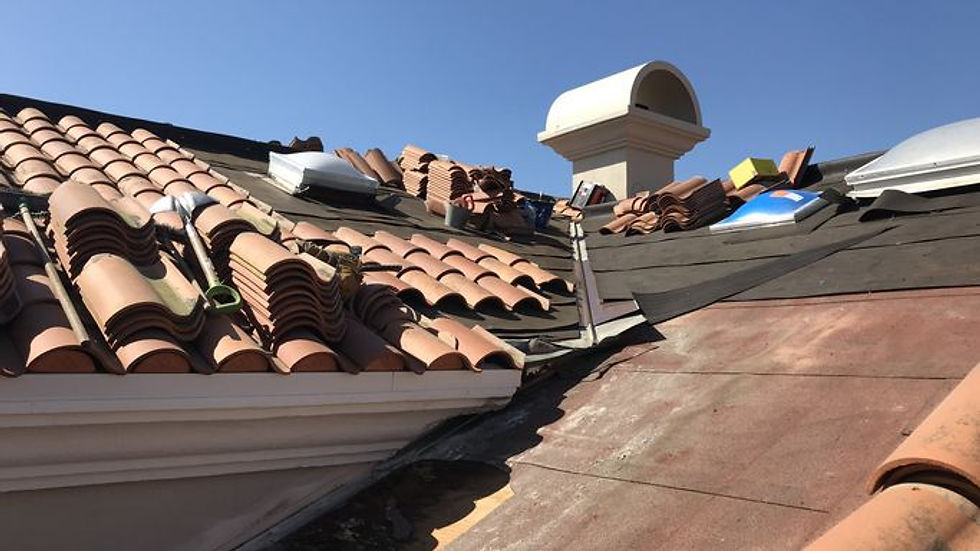
This is where homeowners get caught off guard. Beneath your beautiful tiles lies a hidden layer of asphalt-saturated felt paper or synthetic membrane called the underlayment.
The Inspector's Reality Check
The tiles are highly porous and design-wise, they allow water underneath them through gaps, overlaps, and high winds. The underlayment is the component that actually keeps your house dry. The catch? While clay tiles can last a century, standard underlayment paper only has a useful life of 25 to 35 years. In Southern California, our blistering summer heat heats the airspace beneath S-tiles to extreme temperatures. Decades of this extreme heat bake the underlayment, causing it to become brittle, crack, and turn to powder. Once the underlayment degrades, any water that slips past the tiles flows directly onto your wooden roof deck, causing wood rot and interior ceiling leaks.
The Lifespan Mismatch: Why S-Tile Roofs Fail
The fundamental vulnerability of an S-tile roof is the lifespan mismatch between its components. The outer shell lasts forever, but the internal waterproofing components have a shorter functional lifespan.
Common S-Tile System Points of Failure
When I conduct an inspection, these are the critical systemic failures I routinely document:
Mastic and Tar Breakdown: Instead of installing proper metal counter-flashing embedded into stucco walls, some installations rely on rubberized roofing mastic (tar) to seal the joints around chimneys and walls. The SoCal sun destroys mastic within 3 to 5 years, leaving a wide-open gateway for water.
Tile Creep and Fastener Corrosion: Tiles are nailed or clipped to wooden strips called battens. Over time, humidity, salt air, or minor seismic tremors rust out these fasteners. Deprived of their anchor, tiles slowly slip out of place ("tile creep"), exposing raw underlayment to direct sunlight, which destroys it in a matter of months.
Debris Damming in Valleys: Wind-blown leaves, dirt, and palm fronds love to collect in the deep channels of S-tile valleys. This debris acts like a sponge and a dam. During heavy winter downpours, the backed-up water rises, flows sideways underneath the curves of the S-tiles, and completely bypasses the flashing system.

What This Means for Homeowners: The "Lift and Reset"
If your home's underlayment and flashing have reached the end of their 30-year lifespan but your clay tiles are still in perfect condition, you don't need a brand-new roof. Instead, you face a process called a Lift and Reset.
A roofing contractor will carefully remove your existing S-tiles and stack them on the ground. They will scrape away the failed, brittle underlayment, replace the rusted flashings, lay down a premium new waterproof membrane, and then reinstall your original tiles. It is highly labor-intensive, but it honors the long-lasting nature of the tiles themselves.
Protect Your Roof System with Regular Inspections
An S-tile roof is a phenomenal asset that adds incredible architectural beauty, thermal efficiency, and wildfire protection to your Southern California property. However, treating it as a "maintenance-free" roofing system can lead to costly repairs.
Because the critical underlayment and flashings are hidden from plain sight, you need an expert eye to spot the early warning signs of system breakdown, such as slipped tiles, failing mastic, or clogged drainage valleys, before they manifest as water pooling in your living room.
Are you buying a home with an S-tile roof, or has it been decades since your roof was evaluated? Don't rely on guesswork or a seller’s claim of a "100-year roof." As an InterNACHI Certified Professional Home Inspector, I provide a methodical, unbiased evaluation of the visible components of the roofing system to protect your family and your investment.
Cedrus Property Inspections serves Carlsbad and communities throughout North San Diego County.
Frequently Asked Questions
How long does an S-tile roof last?
The tiles themselves last a long time: clay S-tiles often 75 to 100 years or more, and concrete S-tiles about 40 to 70 years. The parts that keep water out wear out much sooner. Underlayment typically lasts 25 to 35 years, and flashing often begins to deteriorate within 15 to 25 years, depending on materials and exposure to coastal air.
A listing says the home has a "100-year roof." Is that accurate?
Usually it refers to the tiles, not the whole roof system. The underlayment beneath the tiles has a much shorter life. Ask the seller when the underlayment was last replaced, whether a lift and reset has been done, and whether permits were pulled for the work.
Can a home inspector see the underlayment under the tiles?
No. The underlayment is concealed beneath the tiles, so it can't be directly inspected. An inspector looks for visible signs that the system may be breaking down, such as slipped or cracked tiles, exposed underlayment, deteriorated flashing or mastic, debris in valleys, and staining in the attic. When those signs are present, an evaluation by a licensed roofing contractor is the appropriate next step.
What is a lift and reset?
It's a repair for tile roofs where the tiles are still sound but the underlayment and flashing have reached the end of their life. A roofing contractor removes the existing tiles, replaces the underlayment and flashing, and reinstalls the original tiles. It's labor intensive, but it avoids replacing tiles that still have decades of life left.
Will the inspector walk on my tile roof?
Tile roofs usually aren't walked, because tiles can crack under foot traffic. Every full home inspection includes a drone roof inspection, which documents the tile surfaces, flashings, valleys, and penetrations from above without putting weight on the roof.
Related reading: The Roof Age Problem: What Every North San Diego County, California Home Buyer Should Know Before Insurance Shopping and What Can a Drone Roof Inspection Detect That I Can't See?.


Comments